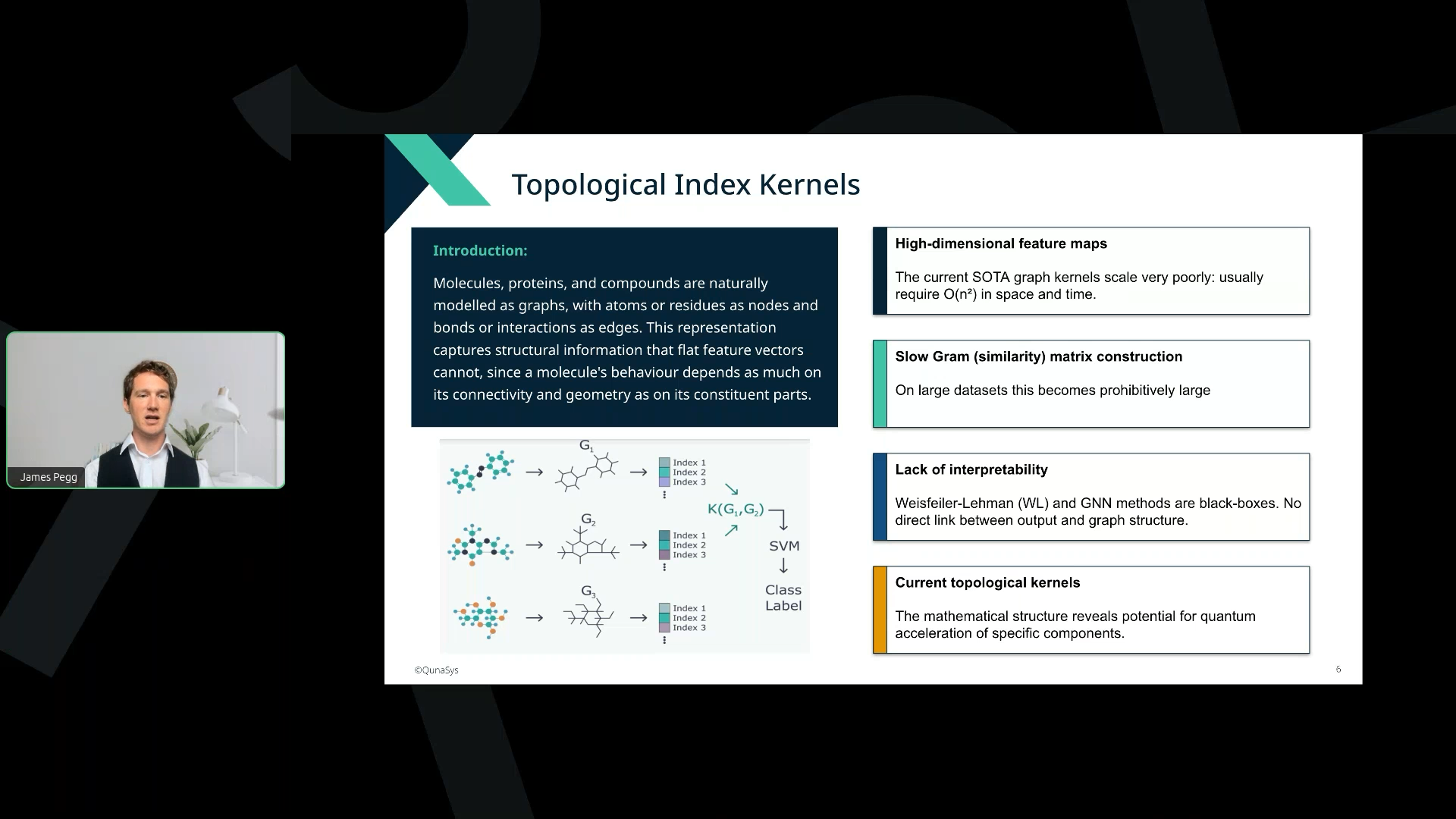
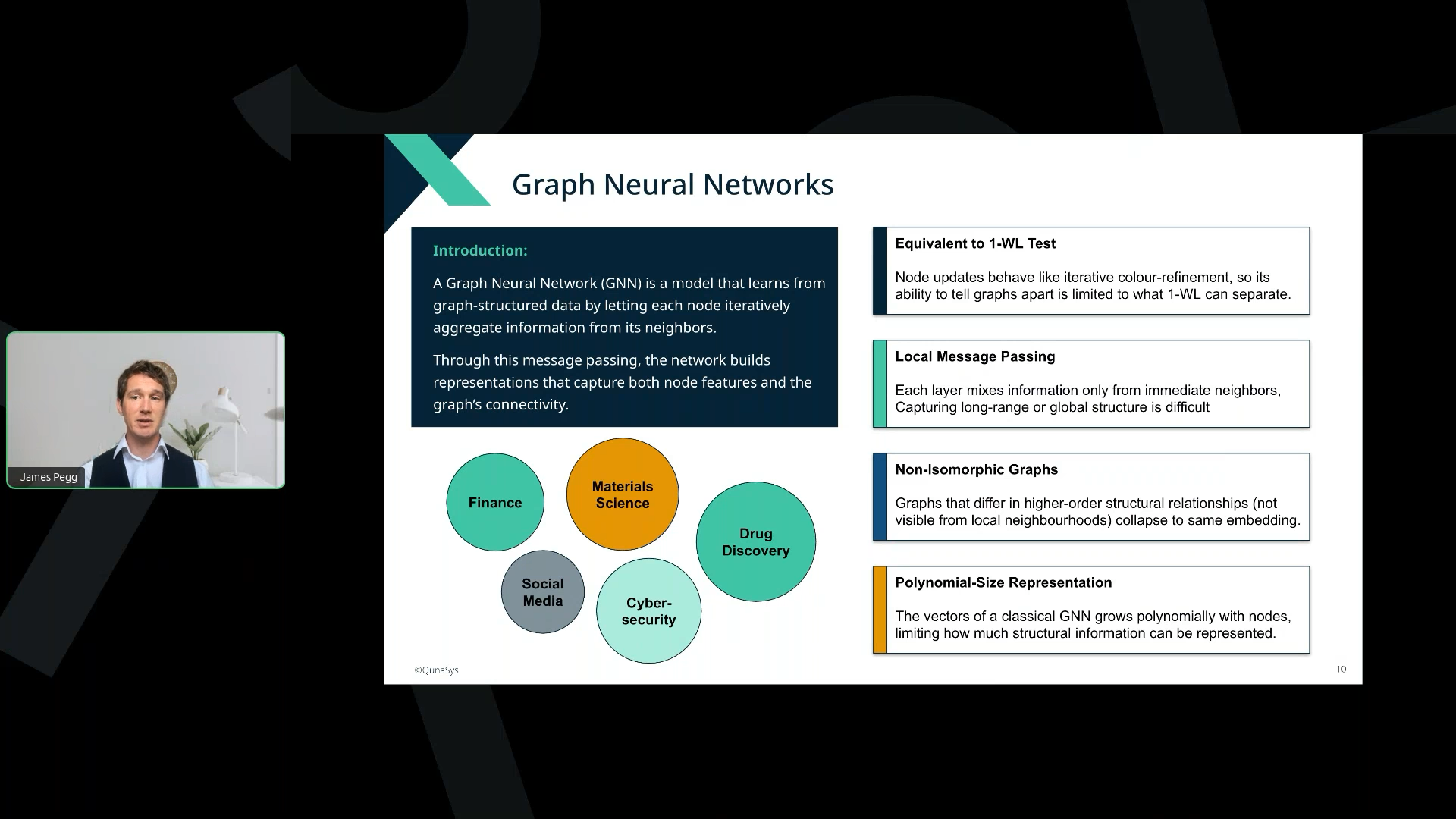
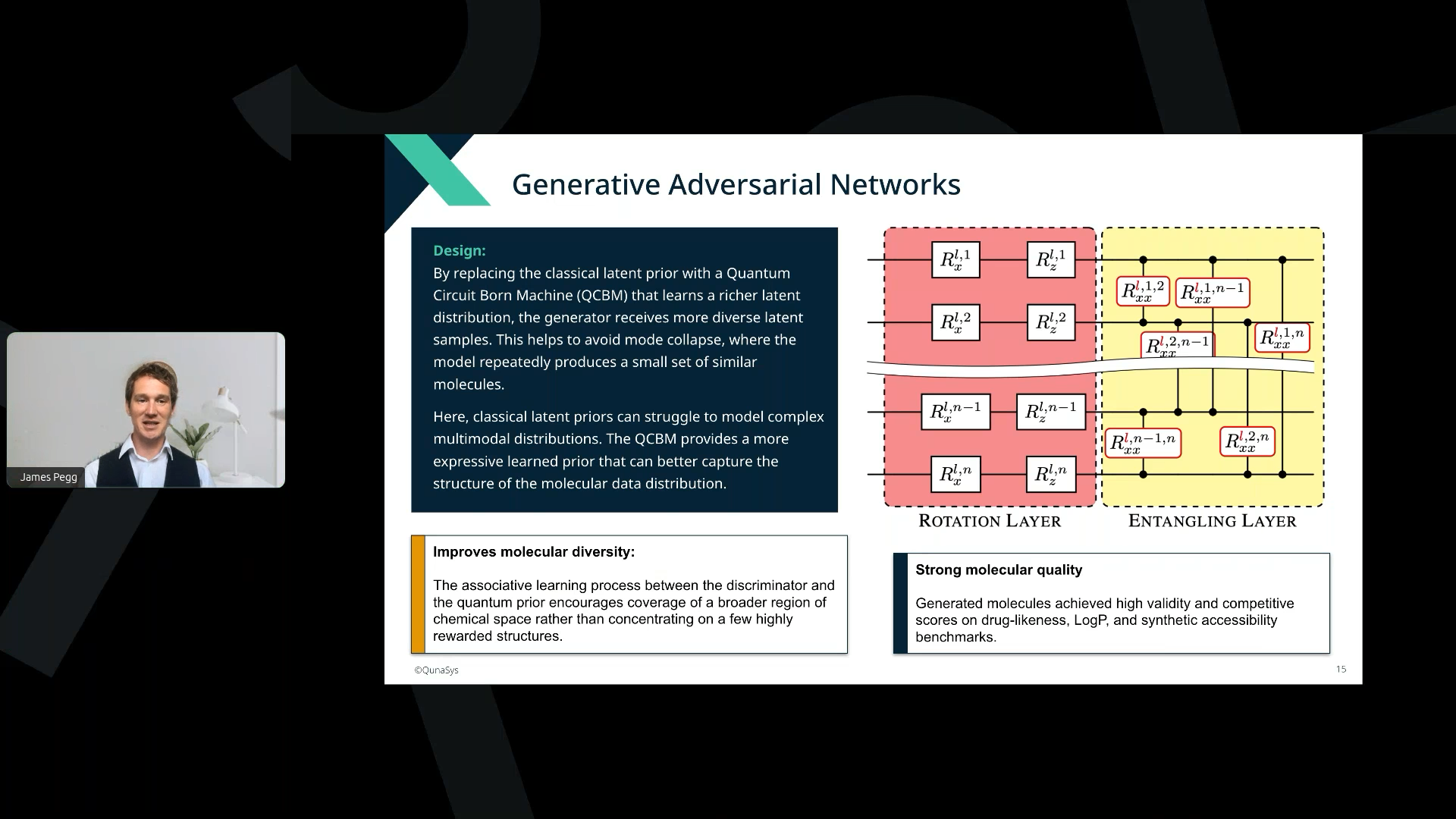
Limits of data-driven discovery: Challenges in machine learning for chemistry and materials

Modern R&D increasingly relies on a combination of simulation, data, and machine learning to explore large chemical and materials spaces. These approaches have significantly accelerated discovery, from drug candidates to new materials.
However, as these workflows scale, new challenges emerge. Generating high-quality data can be computationally expensive and difficult to scale, while machine learning models often struggle to capture subtle physical or chemical effects — especially in complex systems.
In practice, this means that even with large datasets and advanced models, important correlations or behaviors may remain difficult to identify, limiting the ability to reliably guide experimental decisions.
This webinar explores how these bottlenecks emerge in real industrial workflows, how teams address them today, and how new computational approaches — including quantum computing — are being explored to complement existing methods.
What this webinar covered
- Key bottlenecks in data-driven workflows: expensive data generation, limited data quality, and gaps between machine learning models and underlying physics
- How these challenges impact real discovery workflows (e.g. missed correlations, poor generalization, slow iteration cycles)
- How teams are combining simulation, machine learning, and emerging approaches like quantum computing to improve robustness and insight generation
Who was this webinar for
- Chemistry and applied science teams working with simulation, data, and machine learning
- R&D teams scaling data-driven or AI-based discovery workflows
- Technical leaders and decision-makers responsible for computational R&D strategy
About the speaker
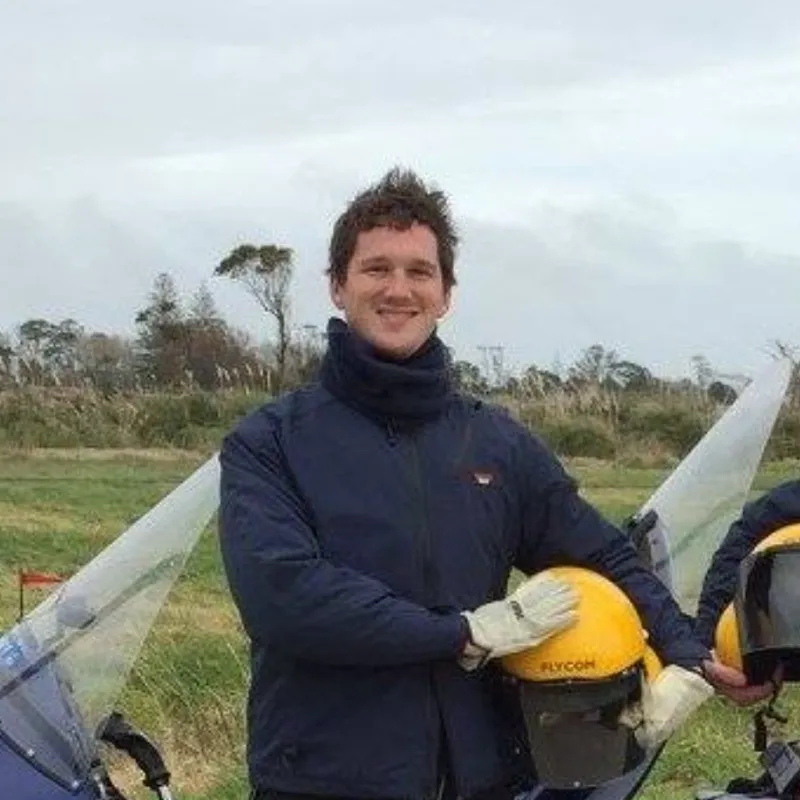
James Pegg
Research Scientist, QunaSys
James Pegg is a Research Scientist at QunaSys. He holds an Eng.D. in computational chemistry, awarded jointly by University College London and the Atomic Weapons Establishment (AWE), where he studied actinide materials using relativistic density functional theory. He subsequently worked as a Research Associate at Imperial College London, applying AI and evolutionary algorithms to the discovery of functional porous materials. He then joined 1QBit as a Quantum Chemist, contributing to the QEMIST Cloud platform, and continued this work at Good Chemistry Company and SandboxAQ, where he led some of the largest cloud-based quantum chemistry calculations ever performed. His expertise spans computational chemistry, machine learning, cheminformatics, and scientific software development.
Sample slides