
The Clean Energy Transition Needs Better Chemistry, and Quantum Computing Might Deliver It Three energy companies on two continents are investing in quantum computing to accelerate decarbonization. Here's why.
The world's energy companies face an enormous challenge. Meeting decarbonization targets requires developing better catalysts for hydrogen production, more efficient solar cell materials, improved methods for capturing carbon dioxide, and cleaner combustion processes. Every one of these breakthroughs depends on understanding chemistry at the molecular level, and conventional computers are struggling to keep up.
The core problem is deceptively simple: to design a better catalyst or a more efficient solar material, you need to simulate how atoms interact with extraordinary precision. But the interactions involved are so complex that even the most powerful conventional supercomputers must rely on approximations. Those approximations work well for simple systems, but for the advanced chemistry that the energy transition demands (reactions involving dozens of interacting atoms, multiple energy states, and dynamic environments) they fall short.
Three major energy companies have concluded that a fundamentally different computing approach is needed, and they are investing in quantum computing to get there.
Why energy companies care about quantum computing
Quantum computers operate using the same physical principles that govern how atoms and molecules behave. This makes them naturally suited to chemistry simulation: the exact kind of computation that energy companies need most.
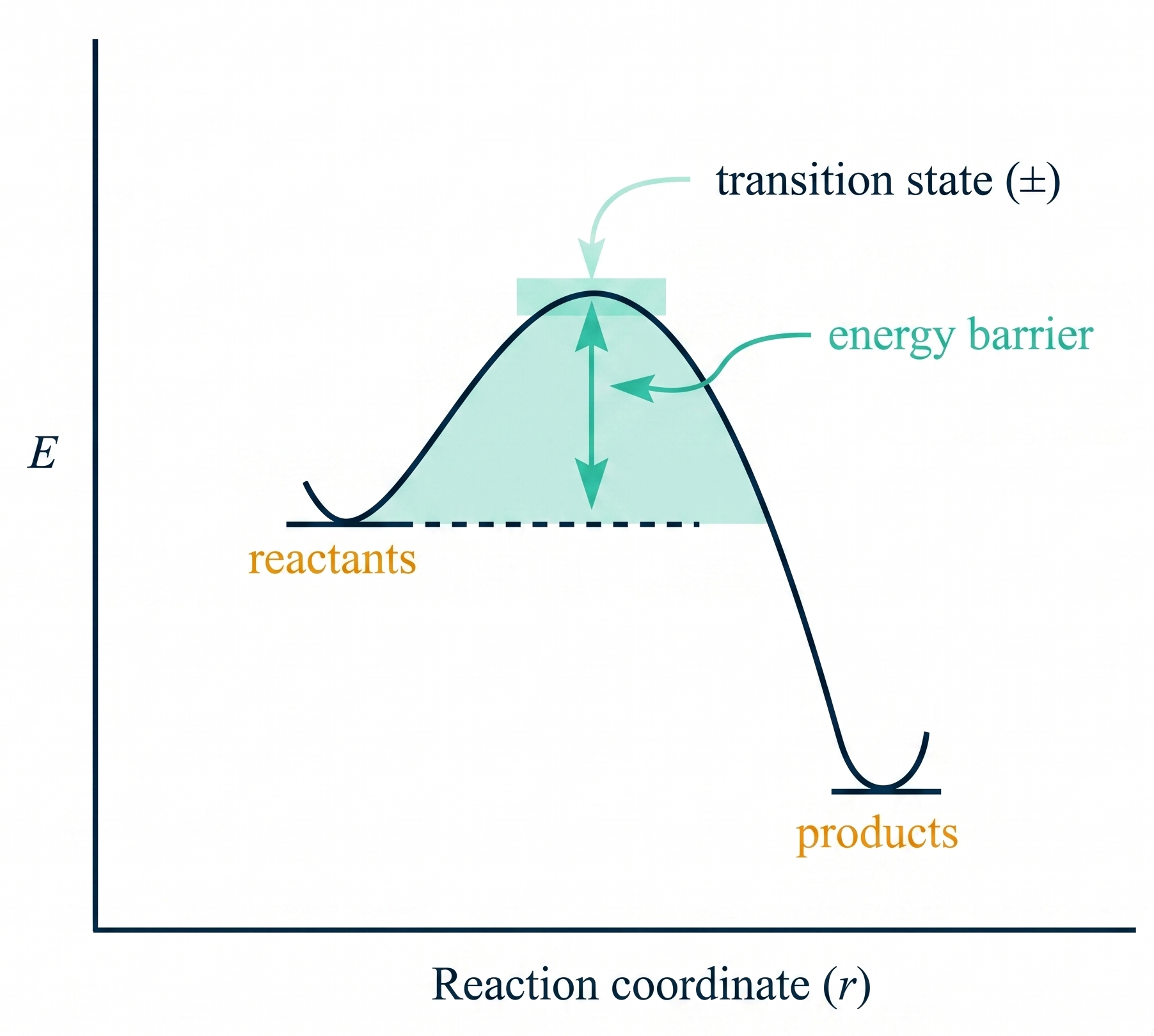
Consider the challenge of designing a better catalyst for hydrogen production. A catalyst works by lowering the energy barrier for a chemical reaction, and its effectiveness depends on subtle electronic interactions between the catalyst material and the reacting molecules. Simulating these interactions accurately requires modeling quantum-mechanical effects that conventional computers can only approximate. A quantum computer, in principle, can model them directly.
The same logic applies across the energy value chain: solar cell materials whose efficiency depends on how electrons move through crystal structures, combustion processes where dozens of simultaneous reactions must be modeled in parallel, and carbon capture materials whose performance hinges on molecular-level binding interactions.
"The classical treatment of highly correlated electronic systems hinders the development of advanced solid-state materials. Here, quantum methods hold the potential to unlock computationally intractable regions of chemical space, accelerating the discovery of the batteries, catalysts and functional materials that underpin the energy transition," says James Pegg, Research Scientist at QunaSys.
Three companies, three entry points
The three energy companies in this case study come from different geographies and different segments of the energy industry, but their motivations are strikingly similar.
One of the largest energy companies in the Asia-Pacific region has been exploring quantum computing for several years, making it one of the longest-standing partnerships in this space. The engagement has evolved through multiple phases: initial chemistry research, technical training for internal R&D teams, and cross-industry knowledge sharing with partners in adjacent sectors. A particularly notable development was a joint session bringing together perspectives from the energy and mobility sectors on how quantum computing could improve the simulation of reactive fluid processes, exactly the kind of cross-pollination that accelerates adoption across sectors. The next step in the partnership is deeper collaboration with the company's research arm.
A leading European energy company became one of the first European enterprises to complete a full quantum chemistry research phase in this space. The work focused on simulating next-generation solar cell materials and optimizing catalytic processes, two of the most commercially significant challenges in the clean-energy transition. An initial research phase has been completed, and a second phase is already underway with expanded scope. For the quantum computing field, this partnership serves as proof that the technology can deliver results to major international energy companies, not just domestic clients.
A major gas utility serving a large metropolitan region approached the problem from an infrastructure angle: can quantum computing improve the fluid simulations used to optimize pipeline networks and processing plants? A focused feasibility study delivered a working prototype and technical roadmap. The results were compelling enough to trigger a follow-on contract, a concrete vote of confidence in the approach.
What they are learning
These engagements are still in relatively early stages, but several findings have already emerged:
The phased model works. None of these companies tried to solve their hardest problems first. Each started with a scoped study or training program, evaluated the results, and then committed additional resources based on evidence. This approach manages risk while building internal expertise.
"To identify technical challenges early and ensure each new improvement can be integrated with confidence, small scale feasibility studies create the data needed to move forward with confidence. Here, by establishing strong scientific foundations and taking a modular approach to quantum engineering, the QunaSys team is able to continuously incorporate year-on-year advances in quantum technology," explains Pegg.
Geography is not a barrier. These partnerships span Asia and Europe, demonstrating that quantum computing for energy is a global trend driven by universal decarbonization pressures, not a regional phenomenon. Companies can access quantum expertise regardless of where they are based.
Government co-funding reduces risk. Several of these engagements have leveraged public research funding programs, reducing the financial burden on the company while signaling alignment with national technology strategy.
The bigger picture
The energy transition will not be achieved through policy alone. It requires fundamental advances in chemistry and materials science: better catalysts, better solar materials, better methods for capturing and converting carbon. These advances depend on computational tools that can model molecular behavior with far greater precision than today's computers allow.
"Of great concern, the environmental cost of running large data centres needs to be resolved. This is where quantum computing can really make an impact, either by accelerating the discovery of solar materials or improving carbon capture technologies," notes Pegg.
Quantum computing is not yet ready to replace conventional simulation for everyday energy R&D. But it is ready for targeted research that builds expertise, delivers early results, and positions companies for the future. The three energy companies in this case study are not waiting for the technology to mature: they are actively shaping how it will be applied to the problems that matter most.
For energy companies considering their own quantum computing strategy, the lesson is clear: leading companies in the industry are already moving. The engagement model (phased research, cross-industry collaboration, public co-funding) makes it accessible. And the problems that quantum computing is best suited to solve (molecular simulation, catalyst design, reaction pathway analysis) are precisely the problems that the clean-energy transition needs solved.
The question is not whether quantum computing will play a role in the future of energy, but when. The companies in this case study have decided that preparing early is the wiser course.
Contact
To learn more about how quantum computing can advance your energy R&D capabilities, please get in touch with our team.